
A tow truck singapore becomes more than machinery when you are stranded on an expressway at midnight. It transforms into a lifeline, a promise that someone will come. This is the invisible architecture of urban life, systems we never think about until we need them desperately. For the delivery driver whose livelihood depends on his van, for the parent rushing to hospital, these recovery vehicles represent something profound: the safety net that keeps our fragile mobility intact.
The Weight of Vulnerability on Singapore’s Roads
There is a particular helplessness that comes with vehicular breakdown. You become immediately aware of your dependence on machinery, on systems beyond your control. In Singapore, where car ownership is already a significant financial burden, recovery costs can feel like another tax on misfortune. With increasing traffic density and an ageing vehicle fleet, breakdowns are inevitabilities woven into urban transport.
The economics reveal much about who we are as a society. Standard towing in Singapore “starts from $80 for two-wheel and $140 for four-wheel towing of standard vehicles,” according to industry data. Night service or public holiday calls add another ten dollars. Distance compounds the cost at approximately three to five dollars per kilometre beyond the initial ten. For many households facing unexpected repair bills, these numbers accumulate into genuine hardship.
The Machinery of Recovery
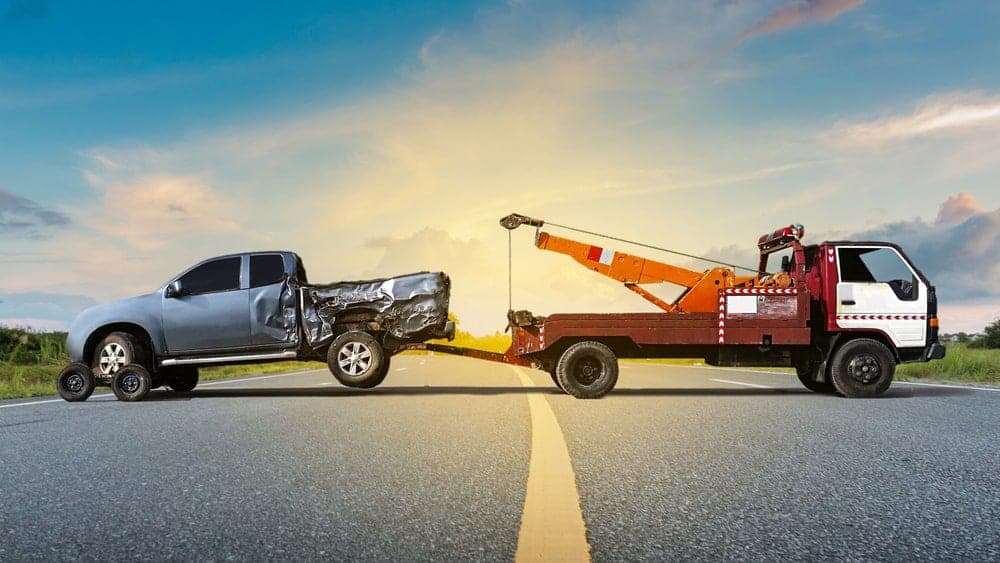
Understanding Singapore’s towing infrastructure requires recognising the diversity of need it must address. There are two types of recovery vehicles: wheel lift trucks and flatbed carriers.
Wheel lift trucks use hydraulic booms to elevate a vehicle’s front wheels whilst the rear wheels remain on the road. This method works adequately for short distances but exposes the car to potential drivetrain damage, particularly for all-wheel-drive vehicles.
Flatbed carriers cradle the entire vehicle on a platform. They cost considerably more, ranging from $130 to $310, but offer complete protection. For electric cars with sensitive battery systems or severely damaged automobiles, flatbed transport becomes necessity rather than luxury. The price differential creates a tiered system of protection based on what you can afford.
The Public Safety Net
Singapore’s EMAS system represents an interesting case of government intervention in roadside assistance. When vehicles break down on major expressways, recovery crews are dispatched to arrive “within approximately 15 minutes.” This is not charity but traffic management, a recognition that stranded vehicles create cascading problems: congestion, secondary accidents, economic inefficiency.
Yet EMAS towing comes with limitations that reveal the boundaries of public provision. The service is free, but it only transports your vehicle “to the nearest designated car park outside the expressways.” From there, you are on your own. You must arrange and pay for onward transport to your preferred workshop. For someone whose car has died far from home, this partial solution can feel like being rescued only halfway.
The Hidden Costs of Mobility
Consider what happens when your vehicle breaks down in a multi-storey car park or at a checkpoint. Accessibility challenges trigger additional charges. The tow truck operator must navigate tight spaces, low clearances, or security protocols. Breaking down in certain locations simply costs more.
Key factors influencing recovery costs include:
- Vehicle type and weight distribution
- Time of day and day of week
- Distance to destination
- Location accessibility and restrictions
- Special equipment requirements (winches, cranes)
- Vehicle condition and damage severity
The temporal dimension deserves attention. After-hours service, defined as 7 PM to 7 AM, commands a premium. So do public holidays. This means breakdowns occurring outside standard hours, which disproportionately affect shift workers, carry higher financial penalties.
Preparing for What We Hope Will Not Happen
The question is not whether your vehicle will fail but when. Singapore’s regulatory environment mandates that towing operators maintain vehicles that are “in good operating condition and meet industry safety standards.” Practical wisdom involves maintaining emergency contact information, understanding your insurance coverage, and knowing your location precisely when calling for help.
Some drivers purchase roadside assistance plans through automobile associations or insurance add-ons. These programmes offer peace of mind but require ongoing financial commitment. The calculation depends on your vehicle’s age, reliability, and driving frequency.
The Human Element in Mechanical Failure
What we often forget in discussions of recovery services is that these transactions occur at moments of acute stress. The tow truck operator becomes a witness to vulnerability, arriving when people are at their most frustrated, frightened, or financially anxious. The quality of service thus involves not only mechanical competence but emotional intelligence, the capacity to reassure and explain and treat people with dignity when their day has already gone badly wrong.
The industry’s promise of round-the-clock availability acknowledges that disaster does not keep office hours. When help arrives at 3 AM on a deserted stretch of road, when the operator explains the problem patiently and offers transparent pricing, when they ensure you can get home safely, these gestures of basic decency take on outsized importance.
Recovery vehicles in Singapore represent more than mechanical assistance. They are the visible manifestation of social contract, the promise that no one will be permanently stranded. Whether through public EMAS services or private operators, whether you can afford flatbed transport or only basic wheel lift, the availability of a tow truck singapore ensures that breakdown, whilst inconvenient and costly, need not become catastrophic.